Commercial Appliance Repair in Bowie, Maryland, with published price ranges up front, the fault confirmed by diagnosis before we quote the repair, and one written figure before any work begins.
Commercial Appliance Repair in Bowie, MD by Bowie Appliance Repair Company
A dead reach in cooler at a Bowie cafe does not wait politely for a slow week. Commercial appliances carry inventory, health inspections, and the lunch rush, so a failure at nine is already costing money by ten. We repair commercial appliances for Bowie businesses, covering restaurant refrigeration, cooking equipment, dish machines, and laundry equipment.
The stock along the Route 50 corridor and in Old Town Bowie runs hard. Diners, cafes, bakeries, and carryout kitchens cycle equipment from early prep to late close, seven days in most cases, and that duty punishes small faults a home kitchen could tolerate for months.
Commercial Equipment We Repair in Bowie
Refrigeration leads commercial work. Reach in coolers and freezers, undercounter units, prep tables, and walk in boxes share one demand: hold temperature through door openings, hot kitchens, and loaded Friday nights. Temperature logs drifting upward are usually the first warning, days before food quality makes the problem obvious.
Cooking equipment follows close behind. Commercial ranges and ovens fail through igniters, valves, thermostats, and controls, usually mid service. Dish machines that stop heating become an inspection problem, not just an inconvenience, and on site laundry backs up fast when a washer or dryer goes down.
How Commercial Repair Calls Are Handled
Downtime shapes the process from the first message. The quote form asks what the equipment is, what it is doing, and what is at risk while it sits idle. A cooler warming with a full load inside gets triaged differently from a second oven limping along, and that priority is set openly.
Diagnosis respects the service around it. Refrigeration temperatures are logged before doors stay open for inspection, and findings are stated in plain operational terms: what failed, what it affects, what can keep running safely meanwhile. Closeout documents the work and final operating readings for the site maintenance file.
Recent Project: Commercial Appliance Repair in Old Town Bowie
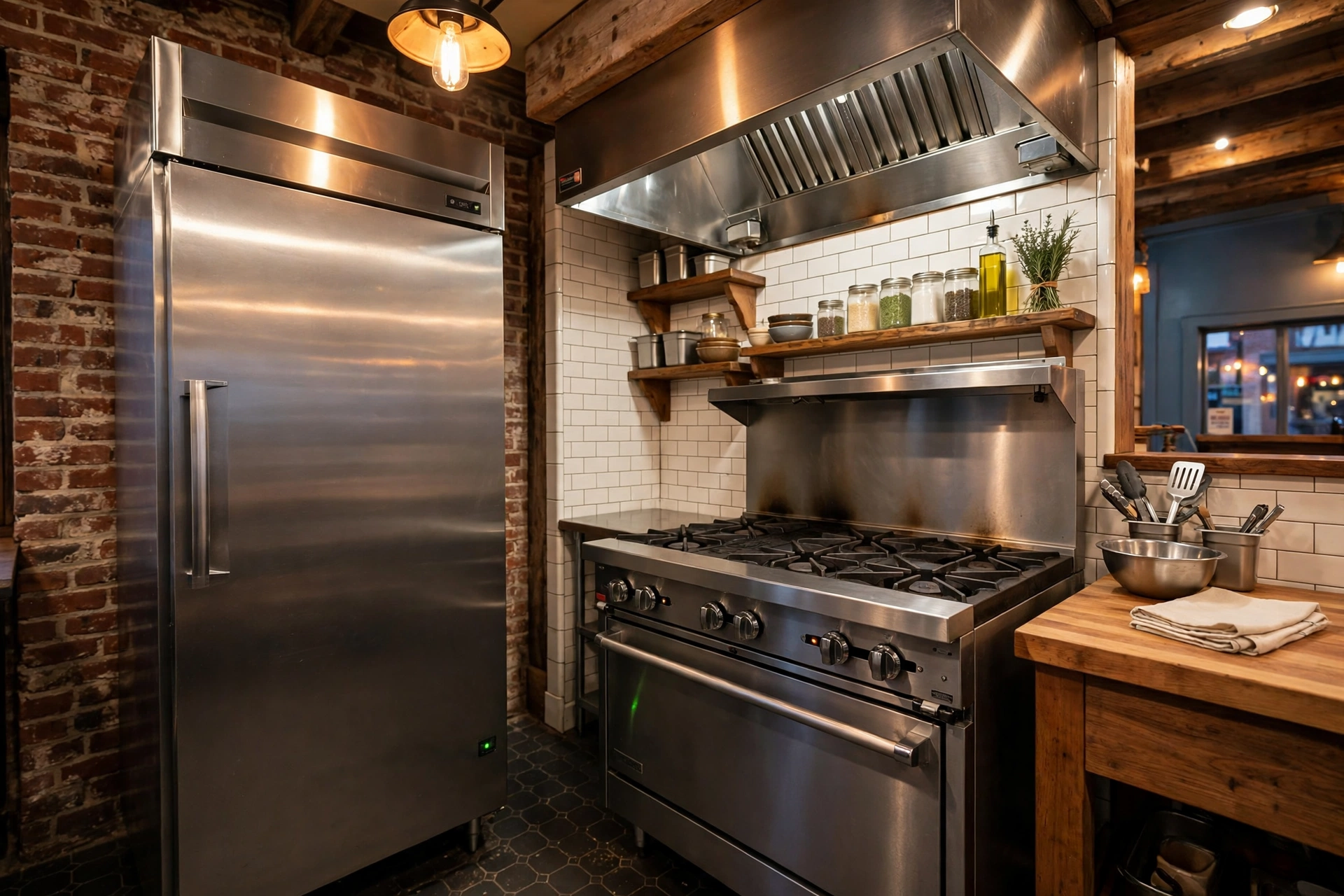
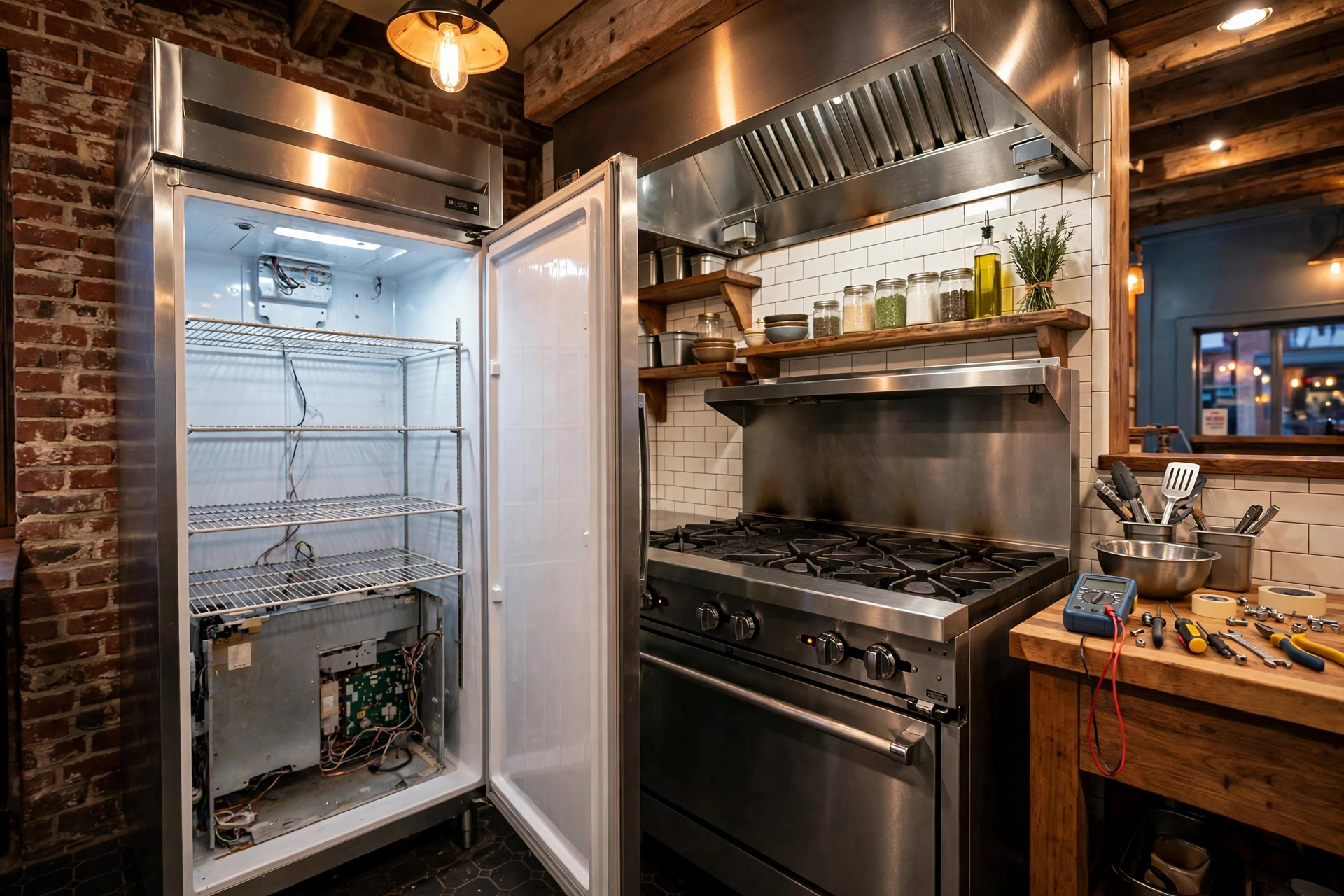
BEFOREAFTER
An Old Town Bowie cafe reported its main reach in cooler climbing several degrees across two mornings despite running constantly. Inspection found a failed evaporator fan motor and condenser coils packed with kitchen grease and flour dust, forcing the system to work against its own airflow. We replaced the fan motor, cleaned the condenser and coil surfaces, and verified the door seals closed fully. The cooler recovered its holding temperature and cycled normally through a full day of service checks.
Turnaround
One visit, timed around the cafe service hours.
Final Price
$475
Commercial Appliance Repair Cost in Bowie, MD
No Bowie company publishes a local price list, and commercial work varies widely by equipment, so these figures are published figures, labeled as such. Published guides put commercial appliance repair at $260 to $640 for most jobs. Residential guides put the average appliance repair at about $179 and refrigeration at about $255, which understates commercial work.
Fan motors, thermostats, igniters, and control repairs sit lower in the commercial range. Compressor level refrigeration work and major cooking components sit higher. A diagnostic visit commonly runs $75 to $125 in published guides and is usually credited toward the repair, and multi unit sites often fold diagnosis into a broader assessment.
Keeping Bowie Kitchens Out of Trouble
Most emergency commercial calls begin as small, logged warnings: a cooler gaining two degrees a week, a dishwasher needing a second run, a dryer taking three cycles where two used to do. Coil hygiene carries outsized weight, since condenser coils inhale grease and flour dust daily, and a matted coil forces refrigeration to run long and hot for months before failing outright.
Request an Appliance Repair Quote in Bowie, MD
Use the quote form at the bottom of this page and tell us the equipment type, the symptom, and what is at risk while it waits. Send the form and we will follow up with triage questions.
Frequently Asked Questions
How much does commercial appliance repair cost in Bowie, MD?
Published figures put most commercial appliance repairs at $260 to $640. Fan, igniter, and control work sits lower; compressor level refrigeration work sits higher. A diagnostic visit commonly runs $75 to $125 in published guides, usually credited toward the repair.
Which commercial appliances do you repair?
Restaurant and cafe refrigeration, including reach in and undercounter units, plus commercial ranges and ovens, dish machines, and on site commercial washers and dryers. Describe anything else in the form and we will say plainly whether it fits our work.
Can repair work be timed around service hours?
In most cases, yes. Visits are planned with the site so intrusive testing avoids lunch and dinner pushes where the kitchen allows. Tell us your service hours and peak windows in the form.
My cooler is warming slowly. How urgent is that?
Treat slow warming as urgent. A cooler losing ground over days is heading for full failure, with inventory exposed the whole way down. Note temperatures and times if you can; that log sharpens the diagnosis.
Do you document the work for inspection records?
Yes. Closeout records the equipment serviced, the fault found, parts fitted, and final operating readings such as holding temperatures, supporting the maintenance history health inspectors expect a food service site to keep.
Should other machines be checked during a repair visit?
Often, yes. Units sharing age and kitchen conditions tend to drift together, so a quick check of sibling equipment during a repair visit can flag the next failure while it is still a small one.
Get Your Appliance Repair Quote
Tell us which appliance is failing and how. We read every request that comes in and respond with the published range for that kind of repair and the next step, starting with a diagnostic visit to confirm the fault.
Prefer to talk it through first? Send the form and we will call you back at the number you give us.