Bowie, Maryland
Wine Cooler Repair in Bowie, MD
Wine Cooler Repair in Bowie, Maryland, with published price ranges up front, the fault confirmed by diagnosis before we quote the repair, and one written figure before any work begins.
Bowie, Maryland
Wine Cooler Repair in Bowie, Maryland, with published price ranges up front, the fault confirmed by diagnosis before we quote the repair, and one written figure before any work begins.
Wine asks for steadiness. Bottles rest best at a set temperature held through summer heat and winter cold alike, and a cooler that drifts a few degrees week after week quietly undoes careful storage. We repair wine coolers for Bowie homeowners, covering cooling systems, fans, sensors, seals, and controls in built in and freestanding units.
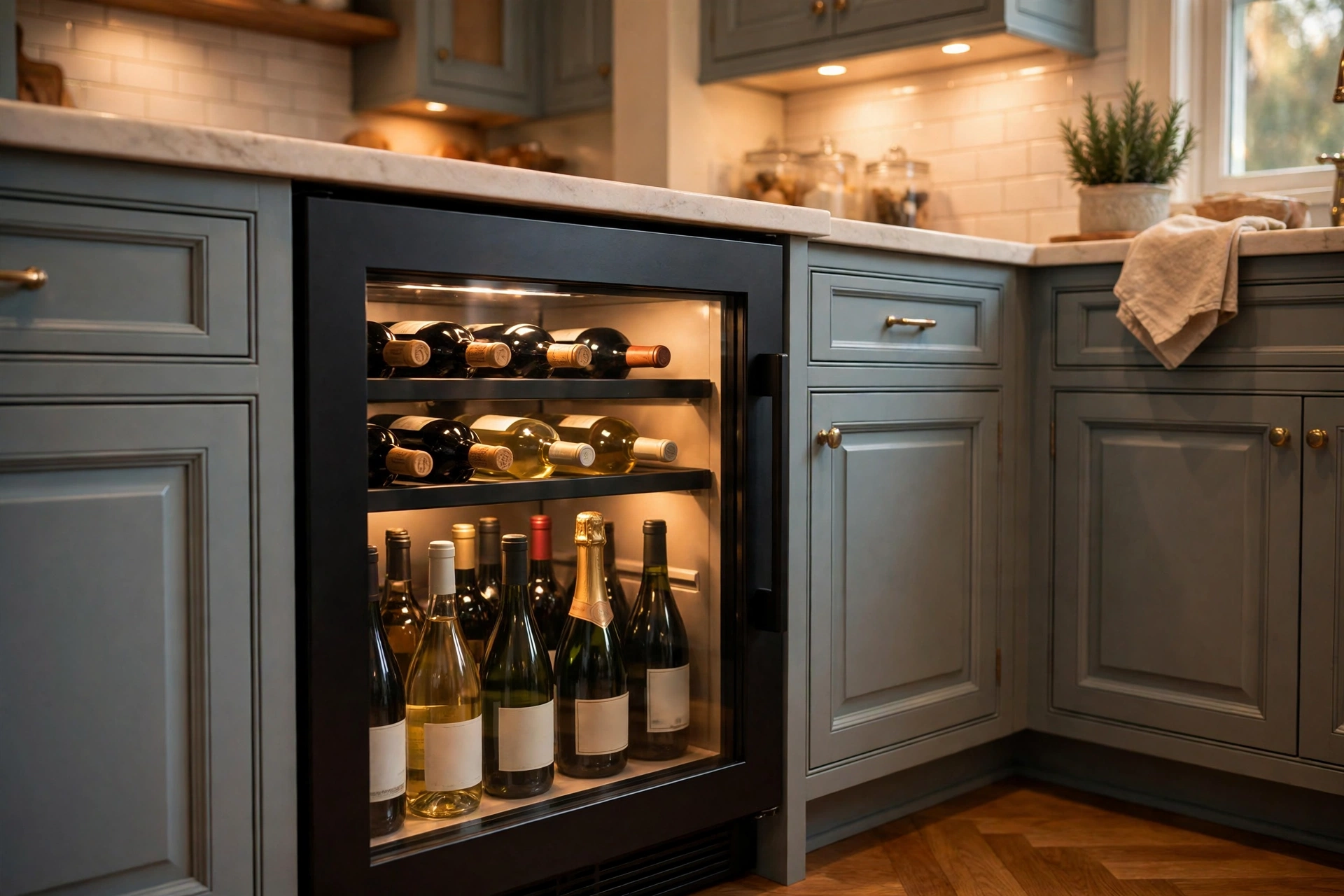
Location shapes the faults. Finished basements in Belair hold freestanding towers beside a bar, while newer Woodmore and Fairwood kitchens carry undercounter units built into the cabinetry. A cooler in a warm garage corner works under a very different load than one in a cool cellar room.
Temperature drift is the call we hear most. A cooler set in the low fifties that creeps toward sixty may have a sensor reading the cabinet wrong, a fan no longer moving air across the cooling surfaces, or a door seal leaking room air in. Each cause looks identical on the display, so testing decides the repair.
Compressor based units and thermoelectric units fail on separate paths. Compressor models share small refrigerator faults: weak cooling, short cycling, constant running. Thermoelectric models cool through electronic modules, and their failures arrive as a zone that warms slowly while the fan keeps spinning. Dual zone coolers isolate faults neatly when one zone holds and the other wanders: check that zone first.
Diagnosis starts with independent temperature readings. A trusted thermometer inside the cabinet tells more than the display, and readings in each zone over time show whether the fault is drift, cycling, or lost cooling. Door seals are checked on every side, since a small gap at one corner loads the whole system.
Airflow comes next. Fans are tested, vents confirmed clear, and the space around the unit assessed, because built in coolers vent through the front and suffer when that path is blocked. Repairs finish with a settling period rather than a snapshot: temperatures are watched across a full cooling cycle before the unit is handed back.
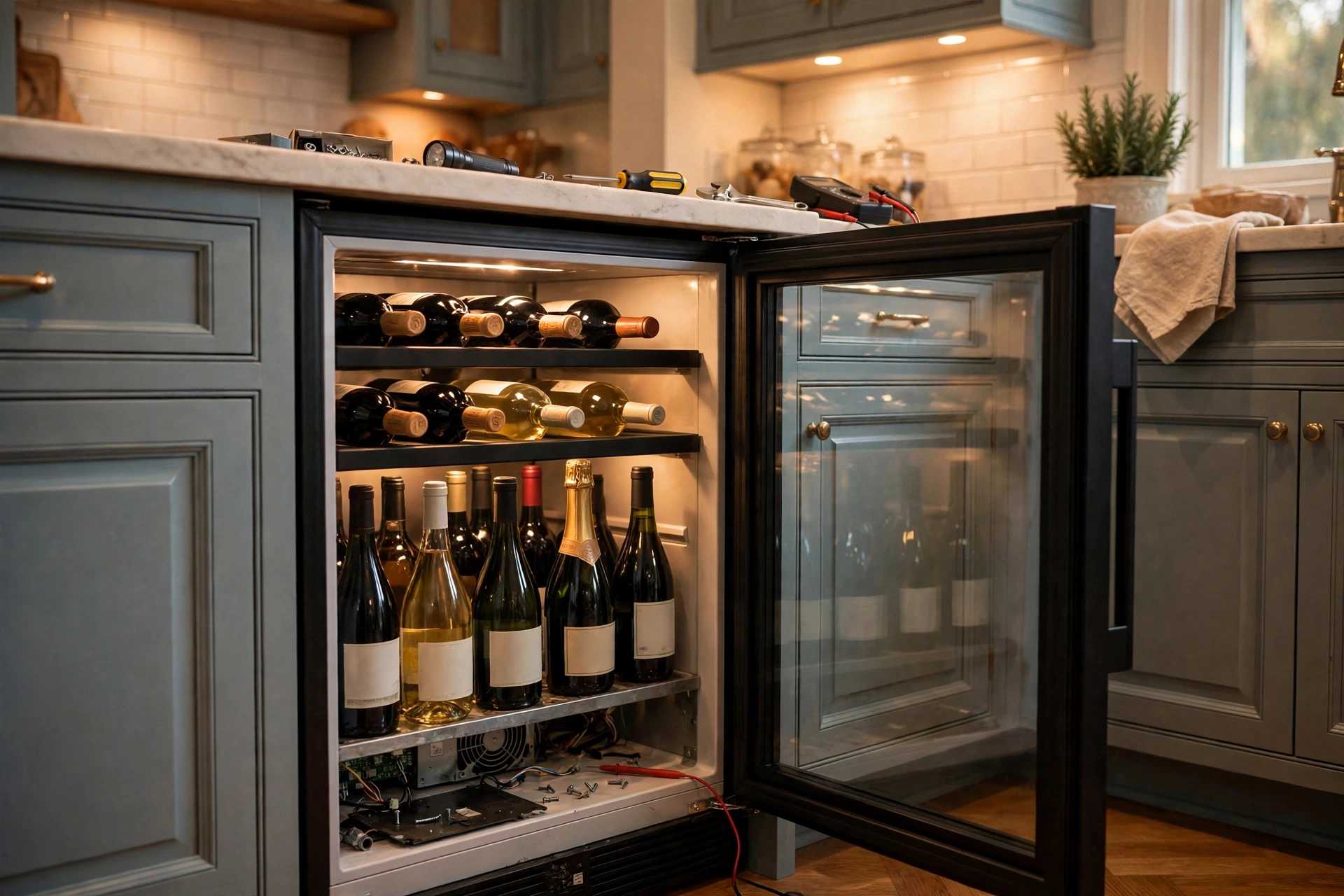
A Yorktown undercounter dual zone cooler held its white wine zone correctly while the red zone drifted upward several degrees each afternoon. Readings confirmed the display was honest, and testing isolated a failing circulation fan in the warmer zone plus a sensor reading low. We replaced the fan and sensor, cleaned the front vent path, and confirmed the door seals closed evenly. Both zones then held their settings through a full afternoon of monitoring.
No Bowie company publishes a local price list, so these figures are published figures, labeled as such. Published guides put wine cooler repair at $175 to $395 for most jobs. Refrigeration repairs average about $255 in those guides, and the average appliance repair overall sits at about $179 per job.
Fans, sensors, and seal work generally land mid range. Cooling system work on compressor based units lands higher, reflecting parts and the diagnostic time a small sealed unit takes. A diagnostic visit commonly runs $75 to $125 in published guides and is usually credited toward the repair.
Short outages rarely harm wine. A full, closed cooler holds temperature for hours, and most repairs are measured in days, so bottles can usually stay put with the door kept shut. Heat is the real enemy: a cooler awaiting repair in a hot garage deserves a cooler room until the work is done.
Use the quote form at the bottom of this page and note the cooler type if you know it, single or dual zone, built in or freestanding, plus what the temperatures are doing. Send the form and we will follow up to arrange the visit.
Published figures put most wine cooler repairs at $175 to $395. Refrigeration repairs average about $255 in published guides, and a diagnostic visit commonly runs $75 to $125, usually credited toward the repair.
Dual zone units monitor and circulate air in each zone separately, so a failing fan or sensor in one zone leaves the other untouched. Independent readings in each zone confirm which side carries the fault.
Thermoelectric units can be repaired. Their cooling modules, fans, and control boards are replaceable parts, and a warming zone often traces to one of them rather than the whole appliance.
Displays report what the cabinet sensor reads, and sensors drift with age. A cooler can show a perfect setting while holding several degrees warmer inside, which is why independent readings come first.
Brief periods slightly above ideal temperature do little harm, especially with the door kept closed. The greater risk is long, repeated drift over weeks.
Constant running means the system cannot reach its set point, or believes it has not. Blocked vents, failing seals, a weak fan, or lost cooling capacity all produce that pattern, and each is testable.
Tell us which appliance is failing and how. We read every request that comes in and respond with the published range for that kind of repair and the next step, starting with a diagnostic visit to confirm the fault.
Prefer to talk it through first? Send the form and we will call you back at the number you give us.