Bowie, Maryland
Oven and Range Repair in Bowie, MD
Oven and Range Repair in Bowie, Maryland, with published price ranges up front, the fault confirmed by diagnosis before we quote the repair, and one written figure before any work begins.
Bowie, Maryland
Oven and Range Repair in Bowie, Maryland, with published price ranges up front, the fault confirmed by diagnosis before we quote the repair, and one written figure before any work begins.
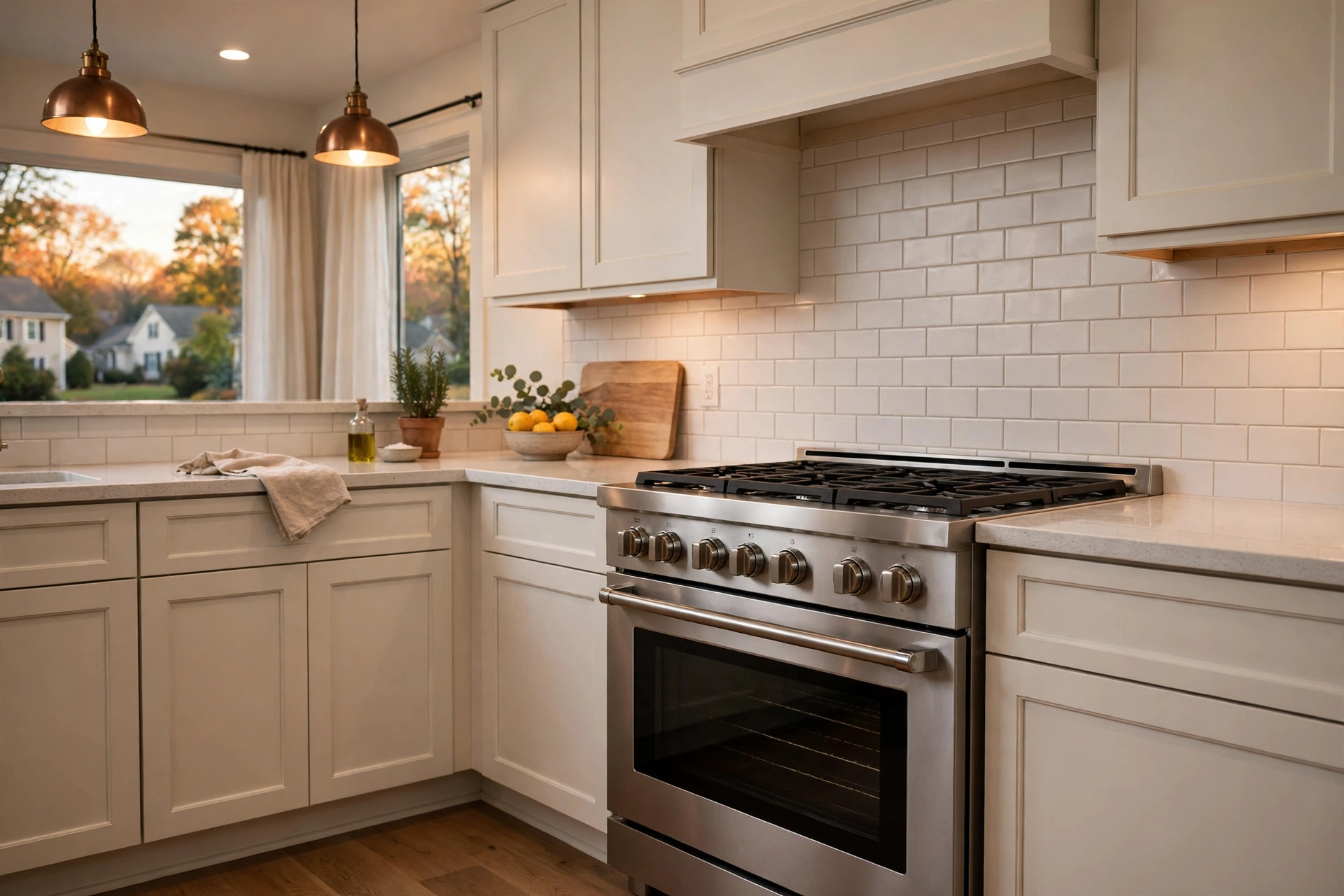
Dinner in a Bowie house tends to run on a schedule, and an oven that quits at five in the evening does not care about that schedule at all. We repair ovens and ranges across Bowie, from older freestanding units in Belair to the built in ovens that went into Woodmore and Mitchellville kitchens during the big building waves. Bowie Appliance Repair Company diagnoses the fault, fits the right part, and tests a full bake cycle before the job is called done.
Cooking faults have a habit of starting small. Bread takes ten minutes longer than it should. Then one night the oven simply never gets hot, and the small signs add up in hindsight to a warning nobody had reason to read.
On a gas range, the bake igniter is the hardest working part in the appliance and the one that fails most often. It has to glow hot enough to draw the right electrical current before the gas valve will open, and an igniter can glow a hopeful orange and still be too weak to do its job. The oven lights some days and not others. Preheating stretches toward forever. That pattern is an igniter reading low, and it is testable with a meter in minutes.
Electric ovens fail differently. A bake element can blister, crack, or burn through at one bright spot and take the whole circuit down with it. Temperature sensors drift with age and start lying to the control, so the oven runs fifty degrees hot and scorches the bottom of everything, or runs cool and leaves the middle of a roast stubbornly raw. Control boards fail too, sometimes after a storm flicker, and take the display and the heating circuits down together.
Cooktop faults round out the list. Burners that click without lighting, surface elements that run full blast or not at all, simmer burners that will not hold a low flame.
Belair is the older heart of Bowie, and its kitchens tell that story honestly. Freestanding ranges have served many of those houses for a long stretch, in utility minded kitchens where the range is a workhorse rather than a showpiece. Those machines are straightforward to repair, parts access is good, and a fresh igniter or element can return one to full service in a single visit.
Travel a few minutes and the picture changes. The 1990s and 2000s building waves in Woodmore, Fairwood, and Mitchellville put wall ovens and separate cooktops into cabinets built around them. Swapping a wall oven means finding a new unit that matches a cutout made for the old one, and the wrong size turns a delivery into carpentry. Repair carries extra weight in those kitchens for a practical reason. The oven that is already installed already fits.
Age ties both kitchen types together. A built in oven and a freestanding range installed in the same season are failing in the same season now, igniters and elements and sensors wearing on the same clock.
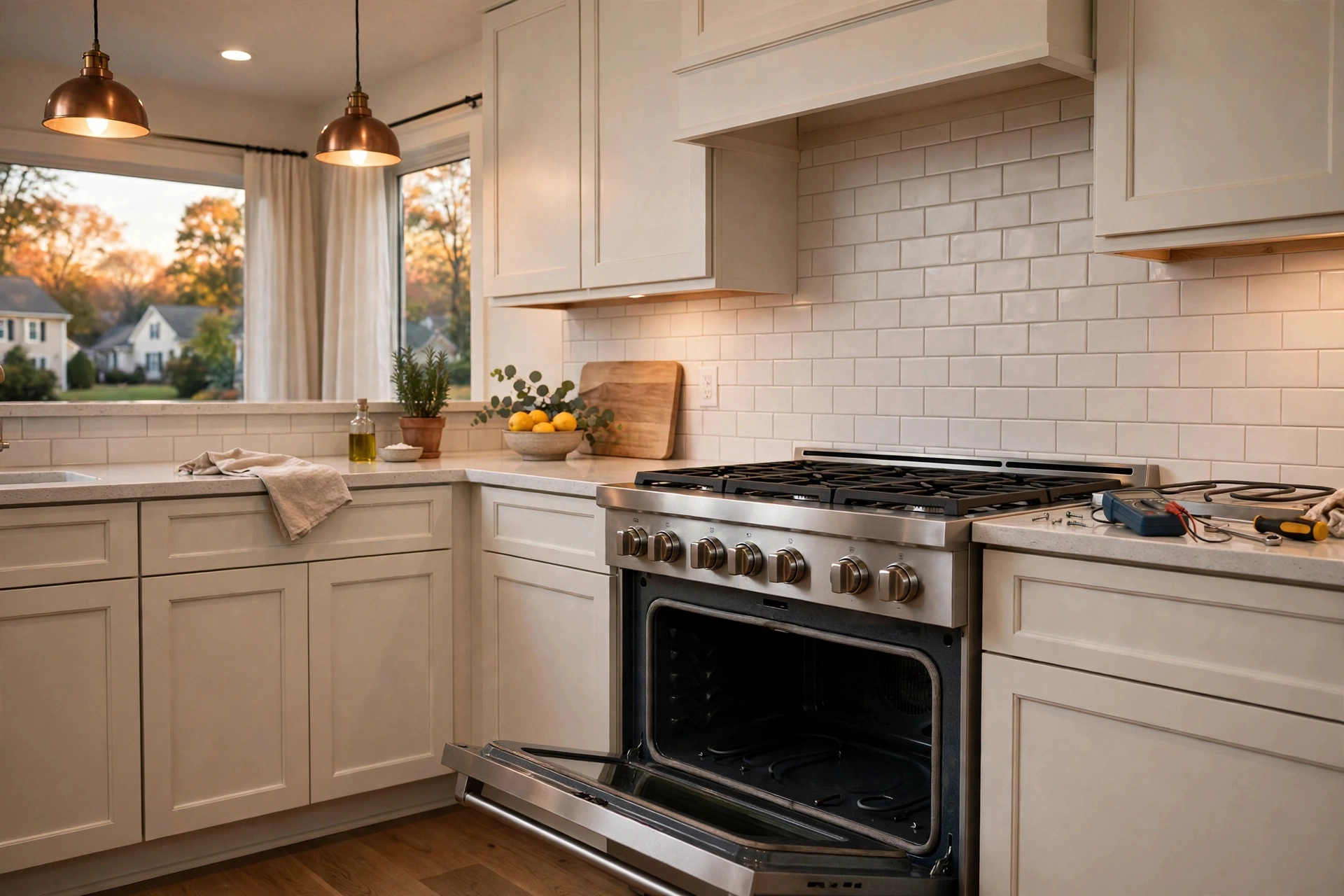
A Belair freestanding gas range would light its stovetop burners without complaint but the oven had stopped heating, with the igniter glowing and no flame following. Meter testing showed the igniter drawing well below the current needed to open the gas valve. We replaced the bake igniter, confirmed the valve opened cleanly, and ran two full bake cycles up to temperature. The oven held its set point evenly through both cycles, and the stovetop needed no work at all.
No Bowie company publishes a local price list, so the honest starting point is published figures, labeled as published figures. National guides put the average appliance repair at about $179 per job, with a typical range of $108 to $251, and cooking appliance repairs average about $214. Our oven and range work in Bowie generally falls between $165 to $380, with the failed part doing most of the talking.
A diagnostic visit commonly runs $75 to $125, and that fee is usually credited toward the repair when you go ahead with it. Igniters and bake elements are among the most affordable repairs on any appliance and sit low in the band. Temperature sensors land nearby. Control boards cost more, and a board on an older built in oven raises the repair versus replacement question, which we will walk through with you using the actual numbers for your machine. The firm price follows diagnosis. It never precedes it.
Send the quote form at the bottom of this page first. Tell us whether the appliance is gas or electric, freestanding or built in, and describe the symptom as you experienced it, including whether the stovetop still works. Stovetop fine, oven dead is a genuinely useful sentence.
At the visit we test before we quote. Igniter current, element continuity, sensor resistance at room temperature, voltage at the control. Those readings separate a forty minute part swap from a board failure, and they take the guesswork out of the price. With the fault confirmed, you get the firm figure and the choice. Go ahead, and we fit the part and run the oven up to a set temperature, then hold it there and check it against the reading, because an oven that lights is not yet an oven that bakes evenly.
One safety note shapes every gas visit. If an oven fault comes with a strong gas smell, do not keep testing the appliance yourself. Turn it off, air out the kitchen, and treat that as the emergency it is rather than a cooking problem.
Use the quote form at the bottom of this page and tell us gas or electric, freestanding or built in, and exactly what the oven or range is doing. Mention any smell, sound, or error code you have noticed. Send the form and we will follow up with the questions that lead to a visit and a firm price grounded in testing.
Published figures put the average appliance repair at about $179 per job, with a typical range of $108 to $251, and cooking repairs average about $214. Our Bowie oven and range repairs generally fall between $165 to $380 depending on the part, and a diagnostic visit commonly runs $75 to $125 and is usually credited toward the repair.
The igniter does two jobs. It glows, and by glowing it draws electrical current that tells the gas valve it is safe to open. An aging igniter often keeps the glow and loses the current, so the valve stays shut and the oven stays cold. A meter test confirms it quickly, and igniter replacement is one of the more affordable repairs we do.
Usually the temperature sensor has drifted, so the control believes the oven is cooler than it really is and keeps the heat coming. A failing control can cause the same behavior, which is why the sensor gets tested rather than assumed. Calibration alone cannot correct a sensor that has drifted well out of range.
In Bowie kitchens the answer leans toward repair more often than people expect. A wall oven lives in a cabinet cutout sized for it, and a replacement with different dimensions adds cabinet work to the bill. If the fault is an element, igniter, or sensor, repair is usually the plain winner. A failed control board on a much older unit deserves a fuller conversation.
The stovetop and the oven are largely separate systems, so most owners do keep cooking on top while the oven waits for repair. The exception is any fault involving a gas smell, a damaged element that sparks, or a control that behaves erratically. Those are stop and call situations, not cook around it situations.
Gas or electric, freestanding or built in, and a plain description of the symptom cover most of it. Add the model number from the tag, which usually sits behind the storage drawer front or around the door frame, and note any error code exactly as it appears.
Tell us which appliance is failing and how. We read every request that comes in and respond with the published range for that kind of repair and the next step, starting with a diagnostic visit to confirm the fault.
Prefer to talk it through first? Send the form and we will call you back at the number you give us.